
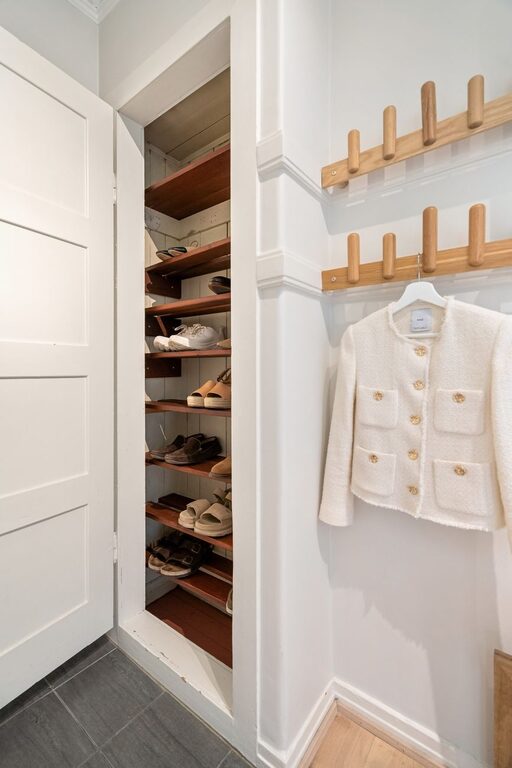
Your entryway is the first part of your home that you see when you arrive and the last place you pass before leaving. Because it handles so many daily items, it can quickly become crowded with shoes, coats, bags, mail, and small essentials.
The good news is that an organized entryway does not require a large budget or a spacious floor plan. With a few practical changes, you can create a welcoming area that makes coming and going easier.
Start by Clearing the Space
Before adding storage, remove everything from the entryway. Place coats, shoes, bags, mail, and other items in separate groups. This makes it easier to see what belongs there and what has simply collected over time.
As you sort, ask yourself:
– Do I use this item regularly?
– Does it belong near the door?
– Is there a better place to store it?
– Does it need to be repaired, donated, recycled, or discarded?
Try to keep only the items that support your daily routine. Seasonal coats, special-occasion shoes, and rarely used accessories can be stored elsewhere. The less you keep in the entryway, the easier it will be to maintain.
Create a Simple Drop Zone
A drop zone is a designated place for the things you carry in and out of the house. It helps prevent items from landing on the floor, stairs, or nearby furniture.
A useful drop zone may include:
– A small tray for keys and sunglasses
– Hooks for bags and jackets
– A basket for gloves, hats, or scarves
– A shelf for mail and small packages
– A container for reusable shopping bags
Choose storage that matches your space. In a narrow entryway, wall hooks and floating shelves can provide storage without taking up much floor area. In a larger space, a console table, bench, or cabinet may offer more room.
The most important rule is to give every frequently used item a specific home. When storage is easy to reach, people are more likely to use it.
Use Wall Space Efficiently
Walls are often the most underused part of an entryway. Adding vertical storage can keep the floor clear while making everyday items easy to access.
Install a row of hooks at a comfortable height for adults and children. If you have enough wall space, use separate hooks for coats, bags, umbrellas, and dog leashes. A peg rail can provide flexible storage because hooks can be moved as your needs change.
Shelves are another useful option. Use them for baskets, folded hats, decorative items, or a small container for keys. Avoid filling shelves with too many objects, since crowded surfaces can make the entryway look untidy.
For a finished look, choose hooks and shelves that complement the colors and materials already used in your home.
Make Shoes Easy to Manage
Shoes are one of the main causes of entryway clutter. A simple shoe storage system can keep pairs together and make cleaning easier.
Consider these options:
– A slim shoe rack for a small space
– A bench with storage underneath
– Stackable shoe boxes
– Open baskets for casual footwear
– A cabinet with doors for a cleaner appearance
Choose a storage limit that fits your household. For example, you might keep one or two pairs of everyday shoes per person near the door and move the rest to bedroom closets.
If you remove shoes at the entrance, place a washable mat or tray nearby. This helps protect the floor from dirt and moisture. In wet or snowy weather, a boot tray is especially useful for containing water and mud.
Add a Comfortable Seat
A seat can make the entryway more practical, especially when putting on or removing shoes. A narrow bench, stool, or small chair can work well, depending on the available space.
Choose a design that includes storage if possible. A bench with a lift-up top can hold shoes, while cubbies underneath can store baskets. If you already have a seat, place a basket beneath it to make use of the open space.
Avoid selecting a seat that is too large for the area. Leave enough room to walk comfortably and open nearby doors without bumping into furniture.
Organize Keys and Small Essentials
Small items are easy to lose when they do not have a regular storage spot. Keeping them together near the door can save time during busy mornings.
A wall-mounted key holder is a classic choice. You can also use a small bowl, tray, or divided organizer on a console table. If several people use the entryway, assign separate hooks or sections for each person.
Keep the system simple. The best storage solution is one that you can use quickly without having to move several items first.
For items you often forget, such as sunglasses, transit cards, or reusable bags, place them in a visible location near the exit. A small reminder note or labeled basket can also help establish a routine.
Set Up a Mail Station
Mail can quickly cover an entryway table or counter. Create one dedicated location for incoming and outgoing mail to keep paper from spreading throughout the home.
Use a wall-mounted sorter, magazine holder, or two simple containers. Label one area “To Sort” and another “To Take” if those categories fit your routine. Set aside a few minutes once or twice a week to review the mail and recycle unwanted paper.
Avoid keeping old receipts, flyers, and envelopes in the entryway. Regular sorting prevents the mail station from becoming another cluttered surface.
Make the Most of Small Spaces
A small entryway can still be organized with compact solutions. Look for storage that uses vertical space or serves more than one purpose.
Helpful ideas include:
– A narrow console table with a lower shelf
– Over-the-door hooks
– A mirror with a small shelf
– A wall-mounted basket
– A slim cabinet for shoes and accessories
– Foldable stools that can be stored when not in use
If your front door opens directly into a hallway, use the nearest wall rather than placing furniture in the walking path. A few well-chosen hooks may be all you need.
Mirrors can also make a small entryway feel brighter and more open. Select a mirror with built-in storage if you want it to serve two purposes.
Use Labels and Baskets
Baskets help contain loose items and create a cleaner visual appearance. Use them for seasonal accessories, pet supplies, reusable bags, or children’s belongings.
Labels make shared storage easier to understand. They are especially useful when several people use the same baskets or cubbies. Simple labels such as “Hats,” “Scarves,” or “Outdoor Items” are clear and easy to maintain.
Choose baskets that fit the storage space without sticking out into the walkway. Matching containers can create a coordinated look, while different textures can add warmth and personality.
Build a Quick Daily Routine
Even the best storage system will not stay organized without a small amount of regular attention. Create a short routine that takes only a few minutes.
When you arrive home:
- Hang your coat on a hook.
- Place your shoes on the rack or tray.
- Put your keys in their designated spot.
- Store your bag where it belongs.
- Sort mail before it spreads to other surfaces.
At the end of each week, return misplaced items to their proper rooms, remove unnecessary papers, and check the shoe area for dirt or clutter.
Keep the System Flexible
Your entryway needs may change throughout the year. In warmer months, you may need more space for hats and light jackets. In colder seasons, boots, gloves, and heavier coats may require additional storage.
Review the area at the start of each season and switch out items that are no longer in regular use. Store off-season accessories in labeled bins or another closet to keep the entryway manageable.
A well-organized entryway does not have to be perfect. It simply needs to make daily routines easier. By reducing excess items, using vertical storage, and giving essentials a clear home, you can create a neat and welcoming entrance that works for your household.